We’re delighted to share that our Training Officer, Miranda Collett, has co-authored a new research paper in the Journal of Mammalogy on one of Argentina’s rarest and least-known bats, Myotis barquezi. Until recently, this species had only ever been identified from two museum specimens from the Yungas forests of Salta Province. This new study has now confirmed live examples from a second locality almost 930 kilometres away in the Iberá Wetlands, at Miranda’s wildlife reserve – a huge expansion of the species’ known range and a sign that there is still much to learn about its ecology.
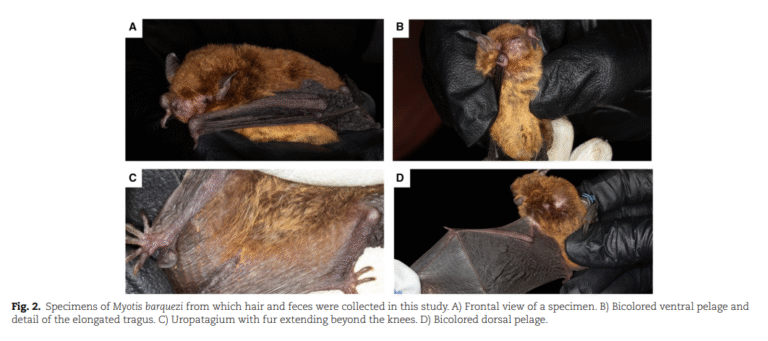
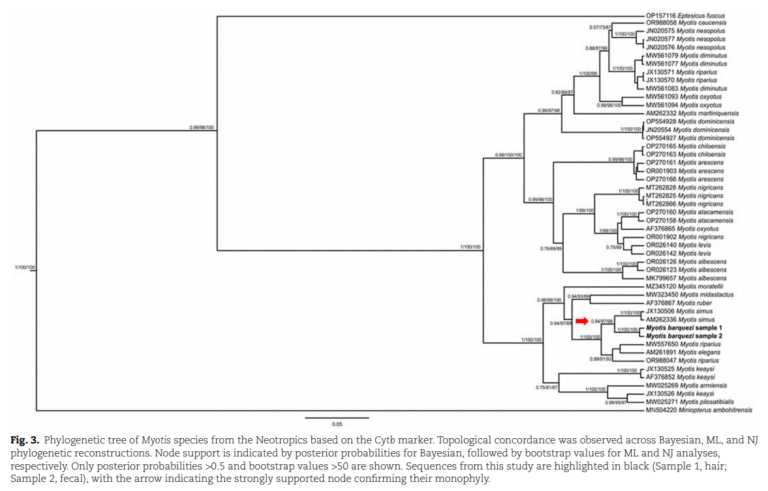
What makes this paper especially exciting is the combination of methods the team used, and the fact that no bat was sacrificed to write a paper. They didn’t rely on a single line of evidence; instead, they looked at how the bats appear, sound, and what their DNA reveals. In simple terms, the bats caught in Iberá looked just like the original description of M. barquezi, with the same distinctive fur colouring and body measurements. When released, their echolocation calls were recorded, providing the first acoustic data ever gathered for the species. These calls match the style of many Myotis bats, but with their own particular frequency pattern that helps distinguish them. The team also collected tiny non-invasive samples – just hair and droppings – and used these to sequence parts of the bats’ mitochondrial DNA. The genetic results were a strong match for M. barquezi and showed how the species fits into the wider Myotis family tree.